 An official website of the United States Government
Official websites use .gov
A .gov website belongs to an official government organization in the United States.

A .gov website belongs to an official government organization in the United States.

A lock or https:// means you’ve safely connected to the .gov website. Share sensitive information only on official, secure websites
 |
Whether a large Emergency Department or a small clinic, facilities must be ready for the potential arrival of unannounced and contaminated patients from a chemical incident. This section provides guidance and considerations for preparing facilities for receiving contaminated patients, isolating patients to minimize the spread of contamination, and decontaminating patients, vehicles, and equipment. Additionally, there is a repository for Best Practices in preparing facilities for chemical incident response.
Select an area below to learn about specific preparations for patient receiving, decontamination and isolation.
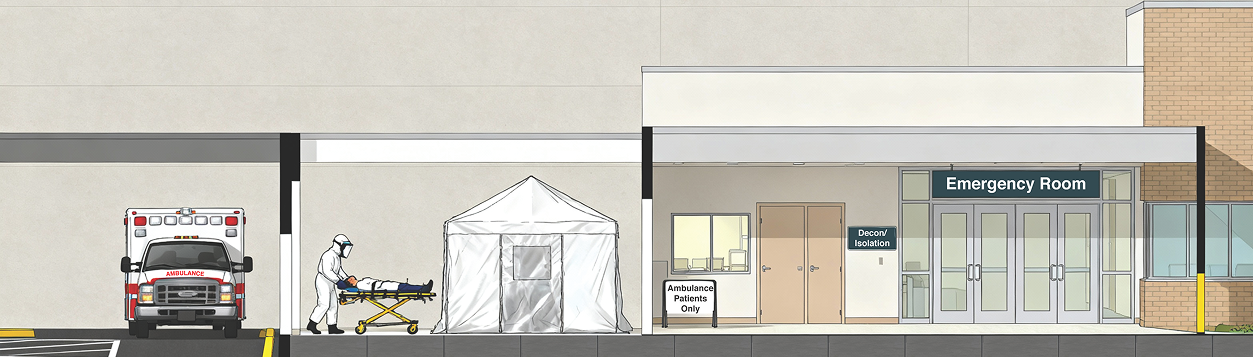
Preferably, patients are transported from a chemical incident scene after they have been decontaminated by trained and equipped teams at the scene. Should the interior of an ambulance or other vehicle become contaminated, by transporting a patient who was not adequately decontaminated or by other means, the vehicle must be thoroughly decontaminated before return to normal service. Exposing subsequent patients to contamination in a vehicle must be avoided.
Select an area below to learn about specific preparations for patient receiving, decontamination and isolation.
Preferably, patients are transported from a chemical incident scene after they have been decontaminated by trained and equipped teams at the scene. Should the interior of an ambulance or other vehicle become contaminated, by transporting a patient who was not adequately decontaminated or by other means, the vehicle must be thoroughly decontaminated before return to normal service. Exposing subsequent patients to contamination in a vehicle must be avoided.
As hospital infrastructure allows, create access control mechanisms that direct contaminated patients to specific decontamination areas before they are taken into the main emergency room treatment area. Outdoor decon areas are preferred (as weather and space allow), but indoor decon rooms just inside the facility can be used as long as they are not in the main treatment area.
Be prepared to address unannounced contaminated patients by:
Preferably, use an exterior decontamination area (such as a tent in the parking lot or installed overhead showers in the ambulance bay).
Factors to consider:
If exterior, temporary patient decontamination capability is not available, use interior locations for patient decontamination. Interior decontamination setups should have:
As facility infrastructure allows, consider capabilities to: