 An official website of the United States Government
Official websites use .gov
A .gov website belongs to an official government organization in the United States.

A .gov website belongs to an official government organization in the United States.

A lock or https:// means you’ve safely connected to the .gov website. Share sensitive information only on official, secure websites
 |
On February 3, 2023, a Norfolk Southern freight train transporting hazardous materials derailed in East Palestine, Ohio. The derailment resulted in the release and subsequent controlled burn of vinyl chloride and other toxic chemicals. The incident led to widespread environmental contamination, evacuation orders, and health concerns for residents and first responders. This case study examines the medical management and safety considerations associated with the incident.
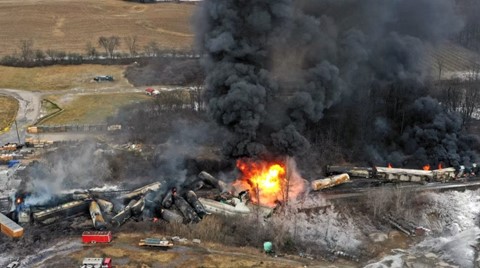
The derailment occurred near the Ohio-Pennsylvania border and involved 38 railcars, including 20 which carried hazardous materials. Five cars contained vinyl chloride, a flammable and carcinogenic gas. To prevent explosion, officials conducted a controlled burn, releasing toxic fumes, including hydrogen chloride and phosgene. Residents within a one-mile radius of the derailment were evacuated, and emergency response agencies from multiple states coordinated efforts to mitigate the disaster.
Vinyl chloride is a colorless, flammable gas with a mild, sweet odor. It is used to manufacture polyvinyl chloride (PVC). At ambient temperatures, it poses significant health risks through inhalation. Decomposition during combustion produces hydrogen chloride, carbon monoxide, carbon dioxide, and traces of phosgene.
Exposure to vinyl chloride and combustion byproducts can result in the following symptoms (which may have delayed onset):
According to CDC Medical Management Guidelines, recommended treatment includes:
First responders to the incident reported cough and cold-like symptoms, with about half telling the CDC about new or worsening symptoms in at least one health system, and about a third reported returning or worsening symptoms when they returned to the incident site. According to the Ohio Department of Health, residents around the derailment site reported headaches, anxiety, coughing, fatigue, and skin irritation, pain, or burning.
Affected individuals received symptomatic treatment including oxygen therapy, bronchodilators, and intravenous fluids. Several were monitored for delayed pulmonary, neurological, and dermatological effects. Decontamination procedures included removal of contaminated clothing and thorough skin and eye irrigation.
Patients exposed only to vinyl chloride gas do not pose a risk of secondary contamination; only liquid vinyl chloride exposure poses such a risk. First responders should initiate decontamination by removing victims from the exposure zone, removing contaminated clothing, and irrigating exposed skin and eyes with copious amounts of water.
Responders must wear appropriate PPE, including Level A or B protection with self-contained breathing apparatus (SCBA). Vinyl chloride-specific gas detectors should be used to monitor air concentrations. Escape respirators and personal monitors are essential for all personnel operating in potentially contaminated zones.
.
Patients exposed only to vinyl chloride gas do not pose a risk of secondary contamination; only liquid vinyl chloride exposure poses such a risk. Hospital staff should ensure secondary contamination is minimized by isolating exposed individuals upon arrival. Patients should undergo decontamination prior to entering the emergency department, including removal of contaminated clothing and thorough washing of skin and eyes. Dedicated decontamination areas should be used to prevent exposure to hospital personnel and other patients.
Healthcare providers should wear appropriate PPE when treating patients exposed to vinyl chloride, including gloves, gowns, eye protection, and respiratory protection if off gassing from clothing or skin is suspected. Staff should be trained to recognize symptoms of chemical exposure and in the use of PPE to prevent secondary exposure.
The East Palestine incident revealed gaps in hazardous material classification, emergency alerting systems, and public health preparedness. It emphasized the need for robust chemical incident protocols, improved hazard communication, and long-term health monitoring for affected communities. Additionally, the reported health effects of many first responders on the scene point to the need for all first responders to be trained to recognize when respiratory protection and PPE usage is required and for such protection to be readily available on all incidents.